The inside is infected
Deep decay, a crack or injury can let bacteria reach the soft centre of the tooth.

Root canal treatment removes infection from inside a tooth, relieves pain and helps you keep your natural smile.
Watch this short demonstration to understand what happens inside the tooth, how infection is cleaned and why the tooth needs a final restoration.
Deep decay, a crack or injury can let bacteria reach the soft centre of the tooth.
The infected tissue is removed. The inside is shaped, disinfected and checked.
The canals are filled and the tooth is protected with a suitable final restoration.
Simple patient education made for Instagram Reels and YouTube Shorts.
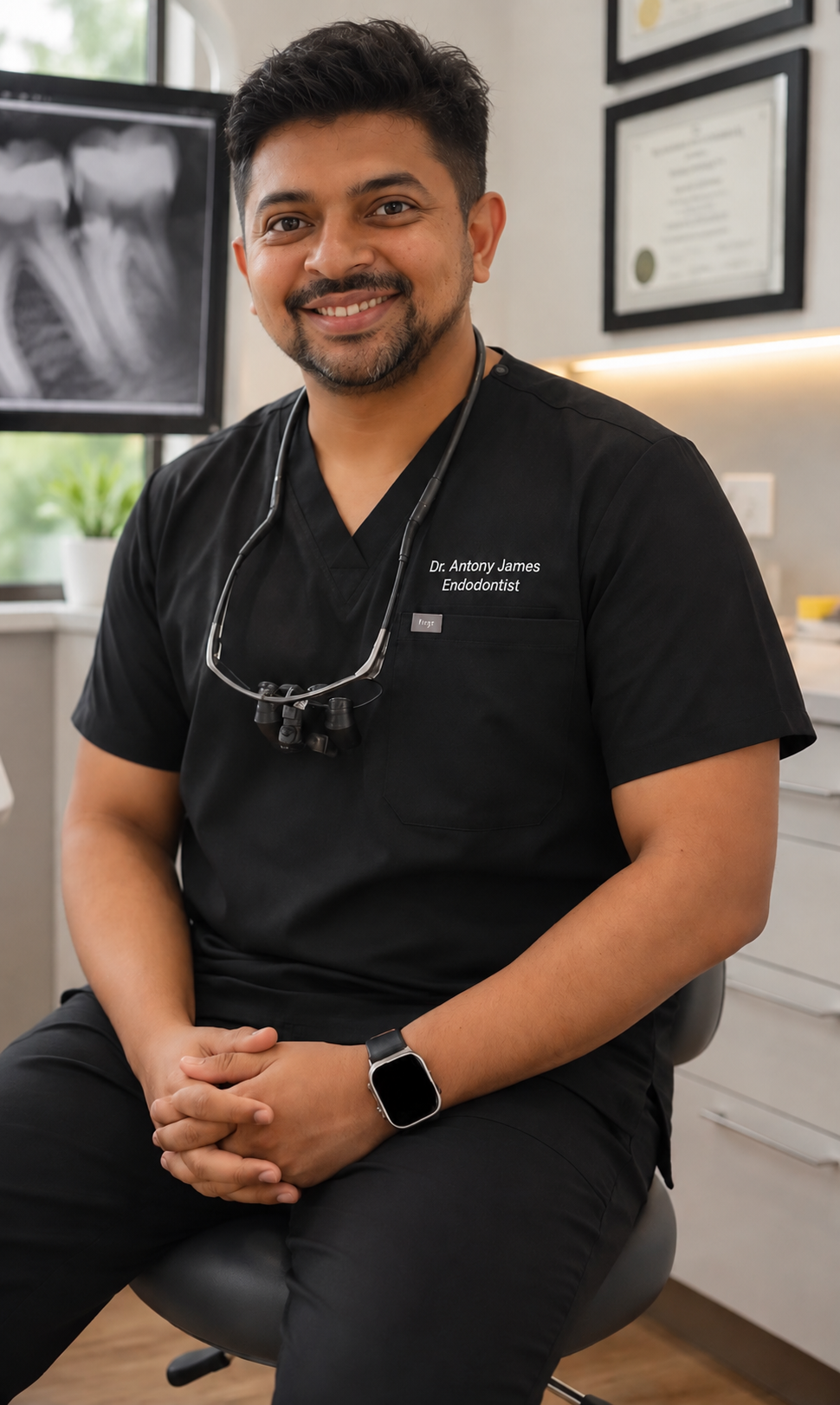
A consultant endodontist focused on comfortable treatment and saving natural teeth.
Dr. Antony completed his BDS at JSS Dental College, Mysuru, followed by MDS training in Conservative Dentistry & Endodontics. He visits different clinics across Mysuru for specialist cases.
Focused specialist care for saving natural teeth.
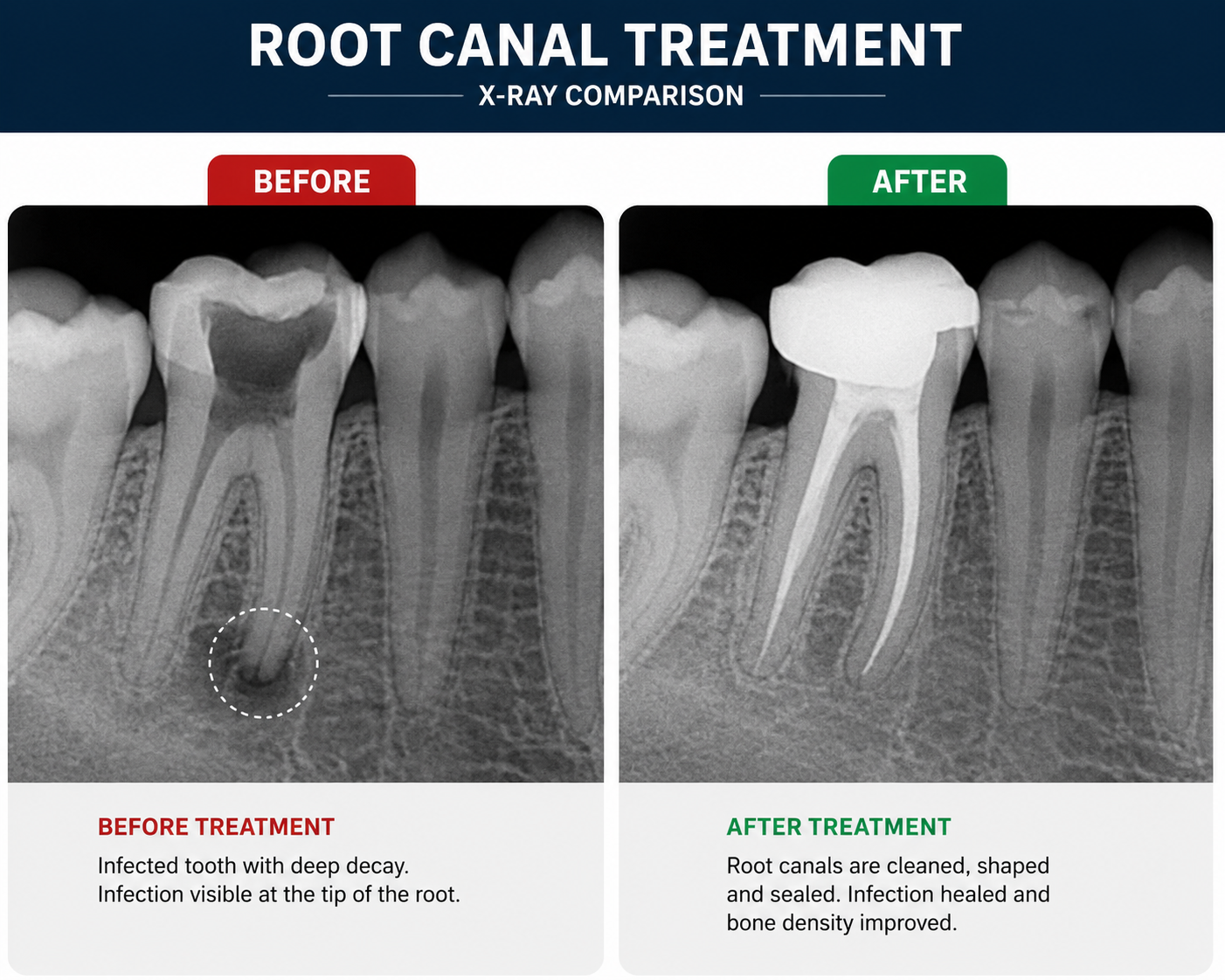
A de-identified educational case showing a lower molar before and after root canal treatment and restoration.
I’m developing Endo Assist—a clinician-led prototype exploring how structured radiographic review, tooth-specific anatomy and explainable case-complexity assessment could support endodontic treatment planning.
The current version is an evaluation prototype. It is not a validated diagnostic system and does not replace clinical examination, diagnostic testing or professional judgment.
Explore the Endo Assist prototype →These signs do not always mean you need a root canal. A dental examination and X-ray are needed to find the cause.
The tooth is numbed before treatment. Most patients feel pressure, not pain. Mild soreness afterwards is common and usually settles.
If the tooth can be saved, root canal treatment lets you keep your natural tooth and avoids leaving a gap.
Many treatments take one or two visits. Difficult anatomy, infection or retreatment can need more time.
Back teeth often need a crown or other strong restoration after root canal treatment. Your dentist will advise you.
Share a few details to request a consultation. Dr. Antony visits different clinics across Mysuru, and the suitable location can be arranged when you speak.
Facial swelling, fever, difficulty swallowing or breathing can require urgent care. Contact a nearby dental or medical service promptly.